Tuesday, February 26, 2019

Excited About Buying A Home This Year? Here’s What To Watch

As we kick off the new year, many families have made resolutions to enter the housing market in 2019. Whether you are thinking of finally ditching your landlord and buying your first home or selling your starter house to move into your forever home, there are two pieces of the real estate puzzle you need to watch carefully: interest rates & inventory.

Interest Rates

Mortgage interest rates had been on the rise for much of 2018, but they made a welcome reversal at the end of the year. According to Freddie Mac’s latest Primary Mortgage Market Survey, rates climbed to 4.94% in November before falling to 4.62% for a 30-year fixed rate mortgage last week. Despite the recent drop, interest rates are projected to reach 5% in 2019.
The interest rate you secure when buying a home not only greatly impacts your monthly housing costs, but also impacts your purchasing power.
Purchasing power, simply put, is the amount of home you can afford to buy for the budget you have available to spend. As rates increase, the price of the house you can afford to buy will decrease if you plan to stay within a certain monthly housing budget.
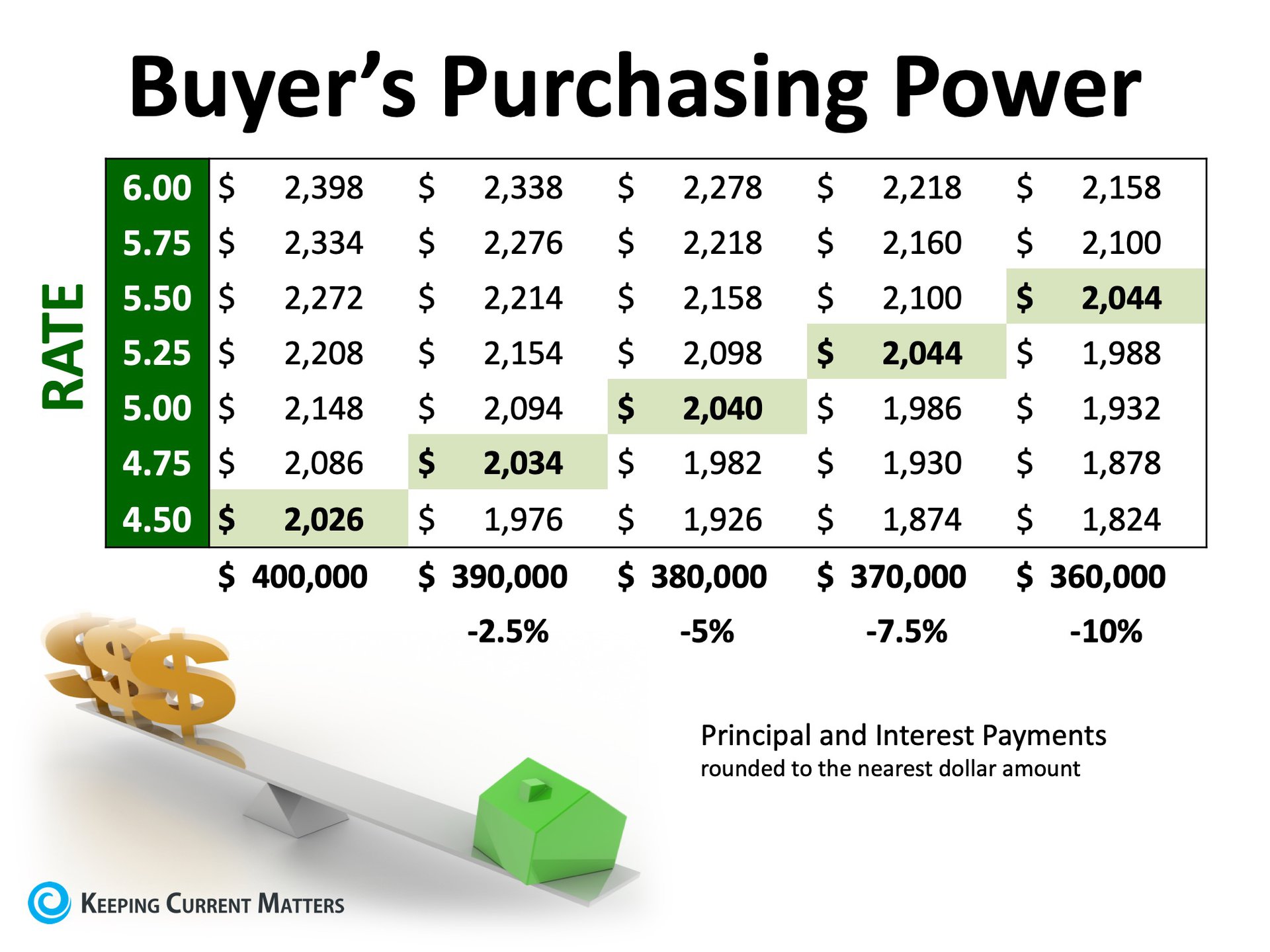
The chart below shows the impact that rising interest rates would have if you planned to purchase a $400,000 home while keeping your principal and interest payments between $2,020-$2,050 a month.
Excited About Buying A Home This Year? Here's What to Watch | Keeping Current Matters
With each quarter of a percent increase in interest rate, the value of the home you can afford decreases by 2.5% (in this example, $10,000).

Inventory

A ‘normal’ real estate market requires there to be a 6-month supply of homes for sale in order for prices to increase only with inflation. According to the National Association of Realtors (NAR), listing inventory is currently at a 3.9-month supply (still well below the 6-months needed), which has put upward pressure on home prices. Home prices have increased year-over-year for the last 81 straight months.
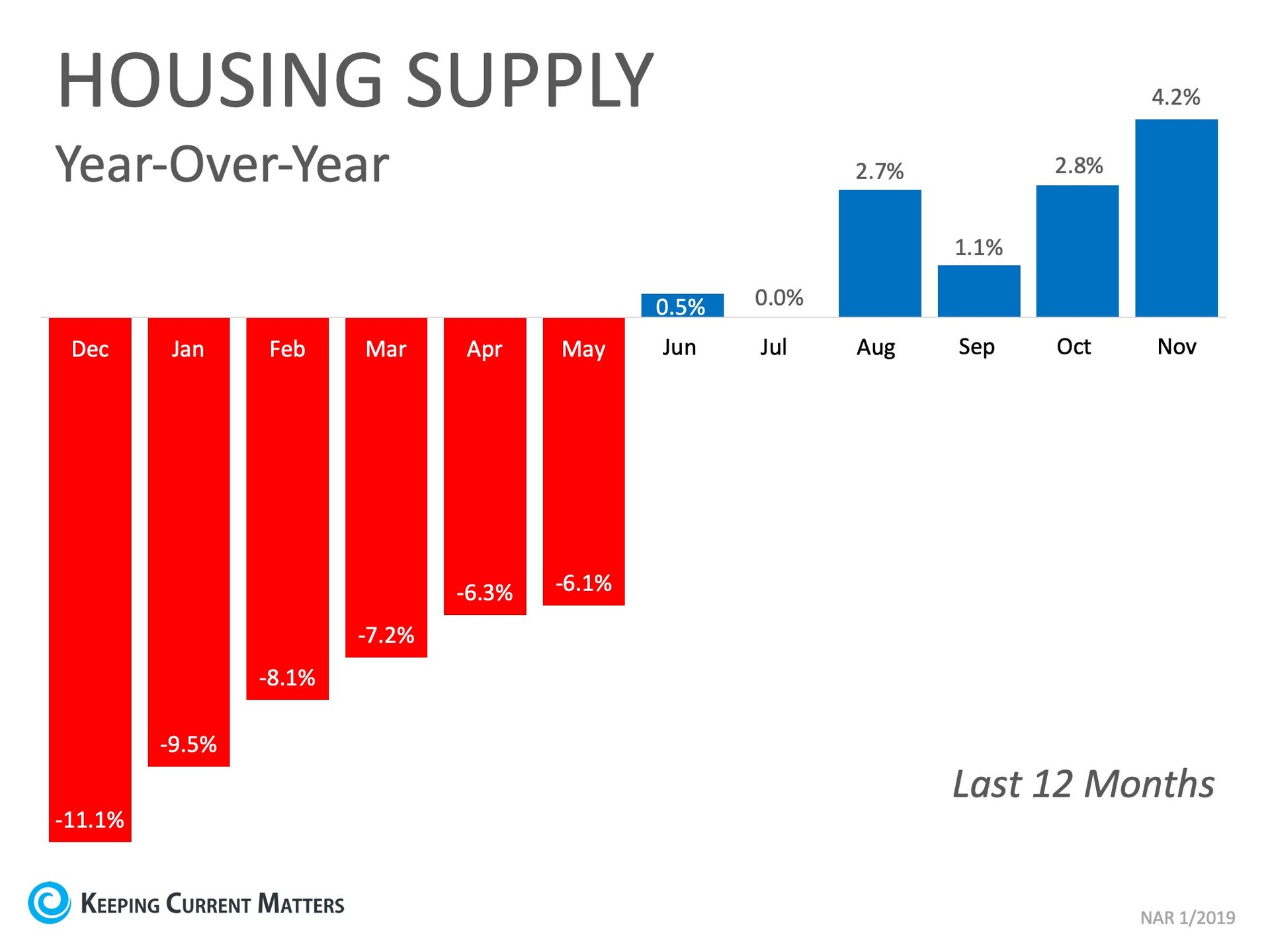
The inventory of homes for sale in the real estate market had been on a steady decline and experienced year-over-year drops for 36 straight months (from July 2015 to May 2018), but we are starting to see a shift in inventory over the last six months.
The chart below shows the change in housing supply over the last 12 months compared to the previous 12 months. As you can see, since June, inventory levels have started to increase as compared to the same time last year.
Excited About Buying A Home This Year? Here's What to Watch | Keeping Current Matters
This is a trend to watch as we move further into the new year. If we continue to see an increase in homes for sale, we could start moving further away from a seller’s market and closer to a normal market.

Friday, February 15, 2019

Thinking Of Buying this year? This Should Be Your First Step!

In many markets across the country, the number of buyers searching for their dream homes outnumbers the number of homes for sale. This has led to a competitive marketplace where buyers often need to stand out. One way to show that you are serious about buying your dream home is to get pre-qualified or pre-approved for a mortgage before starting your search.
Even if you are not in an incredibly competitive market, understanding your budget will give you the confidence of knowing whether or not your dream home is within your reach.
Freddie Mac lays out the advantages of pre-approval in the ‘My Home’ section of their website:
“It’s highly recommended that you work with your lender to get pre-approved before you begin house hunting. Pre-approval will tell you how much home you can afford and can help you move faster, and with greater confidence, in competitive markets.”
One of the many advantages of working with a local real estate professional is that many have relationships with lenders who will be able to help you through this process. Once you have selected a lender, you will need to fill out their loan application and provide them with important information regarding “your credit, debt, work history, down payment and residential history.”
Freddie Mac describes the ‘4 Cs’ that help determine the amount you will be qualified to borrow:
  1. Capacity: Your current and future ability to make your payments
  2. Capital or cash reserves: The money, savings, and investments you have that can be sold quickly for cash
  3. Collateral: The home, or type of home, that you would like to purchase
  4. Credit: Your history of paying bills and other debts on time
Getting pre-approved is one of many steps that will show home sellers that you are serious about buying, and it often helps speed up the process once your offer has been accepted.

Bottom Line

Many potential homebuyers overestimate the down payment and credit scores necessary to qualify for a mortgage. If you are ready and willing to buy, you may be pleasantly surprised at your ability to do so today. Please call me for my lender recommendations.  In some cases you can have an answer in just a few hours and can have your loan in 2 weeks!

Thursday, February 14, 2019

Why It Makes No Sense To Wait For Spring To Sell

Why It Makes No Sense to Wait for Spring to Sell

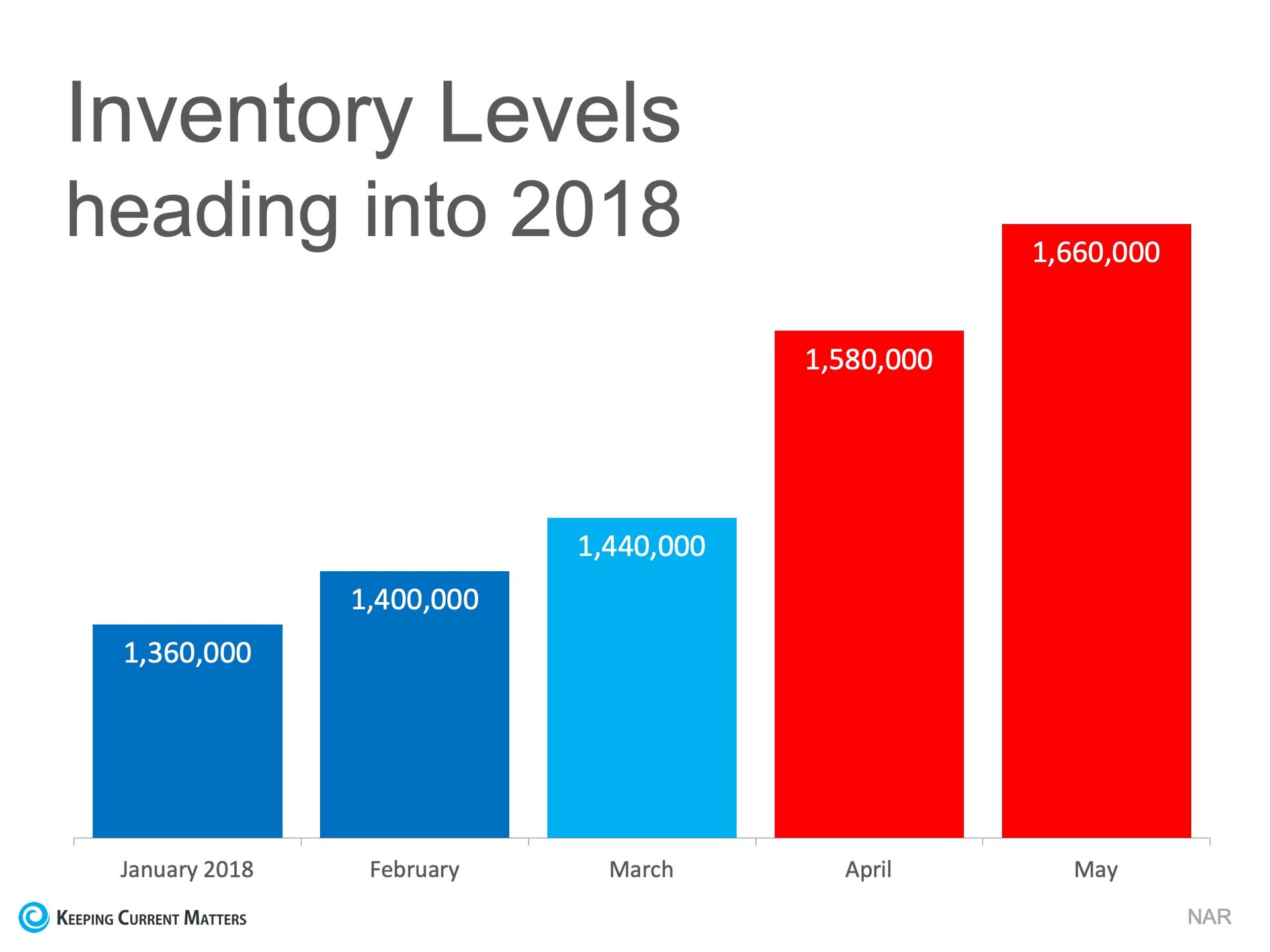
The supply of homes for sale dramatically increases every spring, according to the National Association of Realtors (NAR). As an example, here is what happened to housing inventory at the beginning of 2018:
Why It Makes No Sense to Wait for Spring To Sell | Keeping Current Matters
Putting your home on the market now, rather than waiting for increased competition in the spring, might make a lot of sense.

Bottom Line

Buyers in the market during the winter are truly motivated purchasers and they want to buy now. With limited inventory currently available in most markets, sellers are in a great position to negotiate. Call us today!

Wednesday, February 13, 2019

Where Are Home Values Heading?

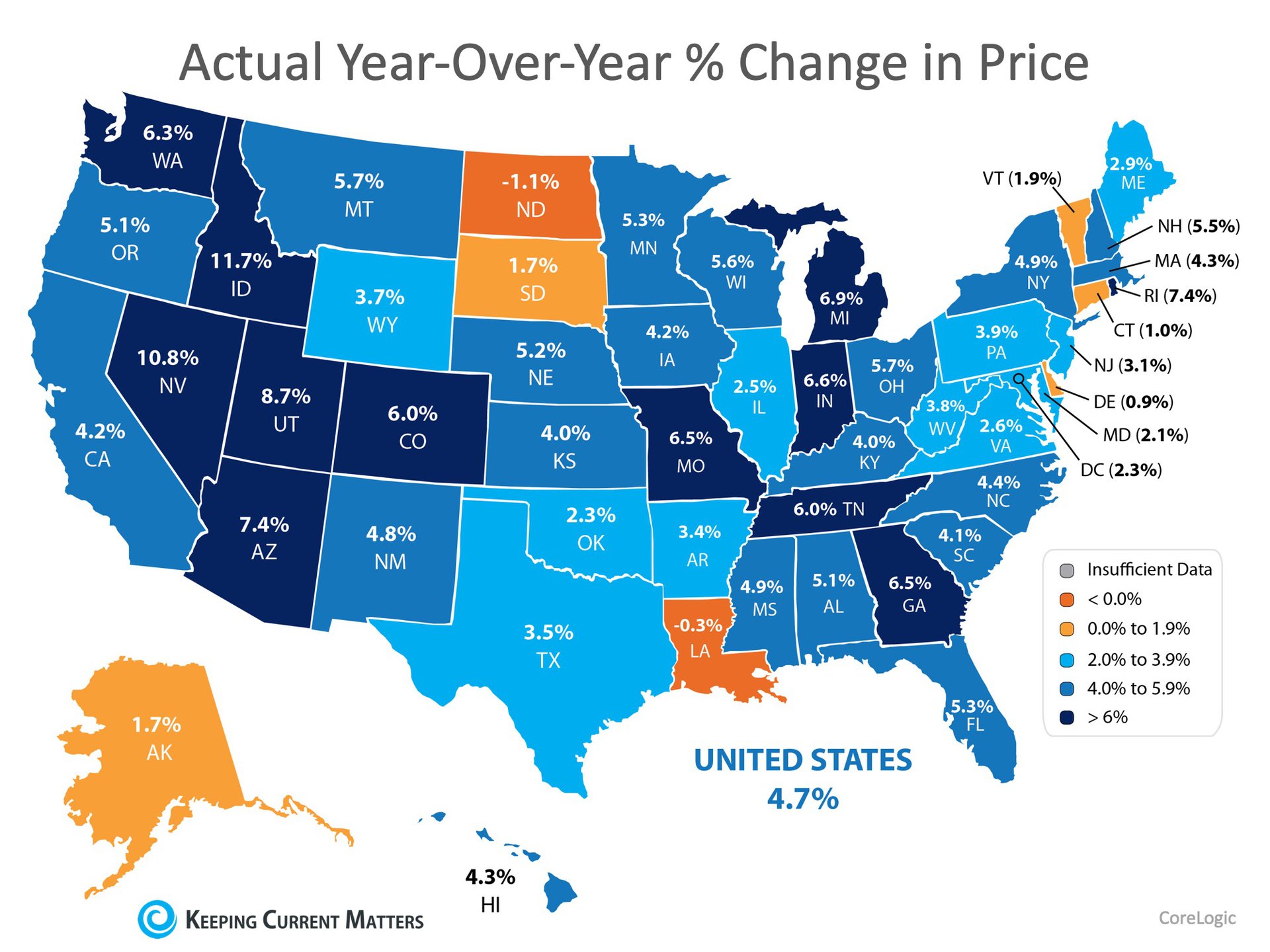
If your plan for 2019 includes selling your home, you will want to pay attention to where experts believe home values are headed. According to the latest Home Price Index from CoreLogic, home prices increased by 4.7% over the course of 2018.
The map below shows the results of the latest index by state.
How To List Your Home for the Best Price | Keeping Current Matters
Real estate is local. Each state appreciates at different levels. The majority of the country saw at least a 2.0% gain in home values, while some residents in North Dakota and Louisiana may have felt prices slow slightly.
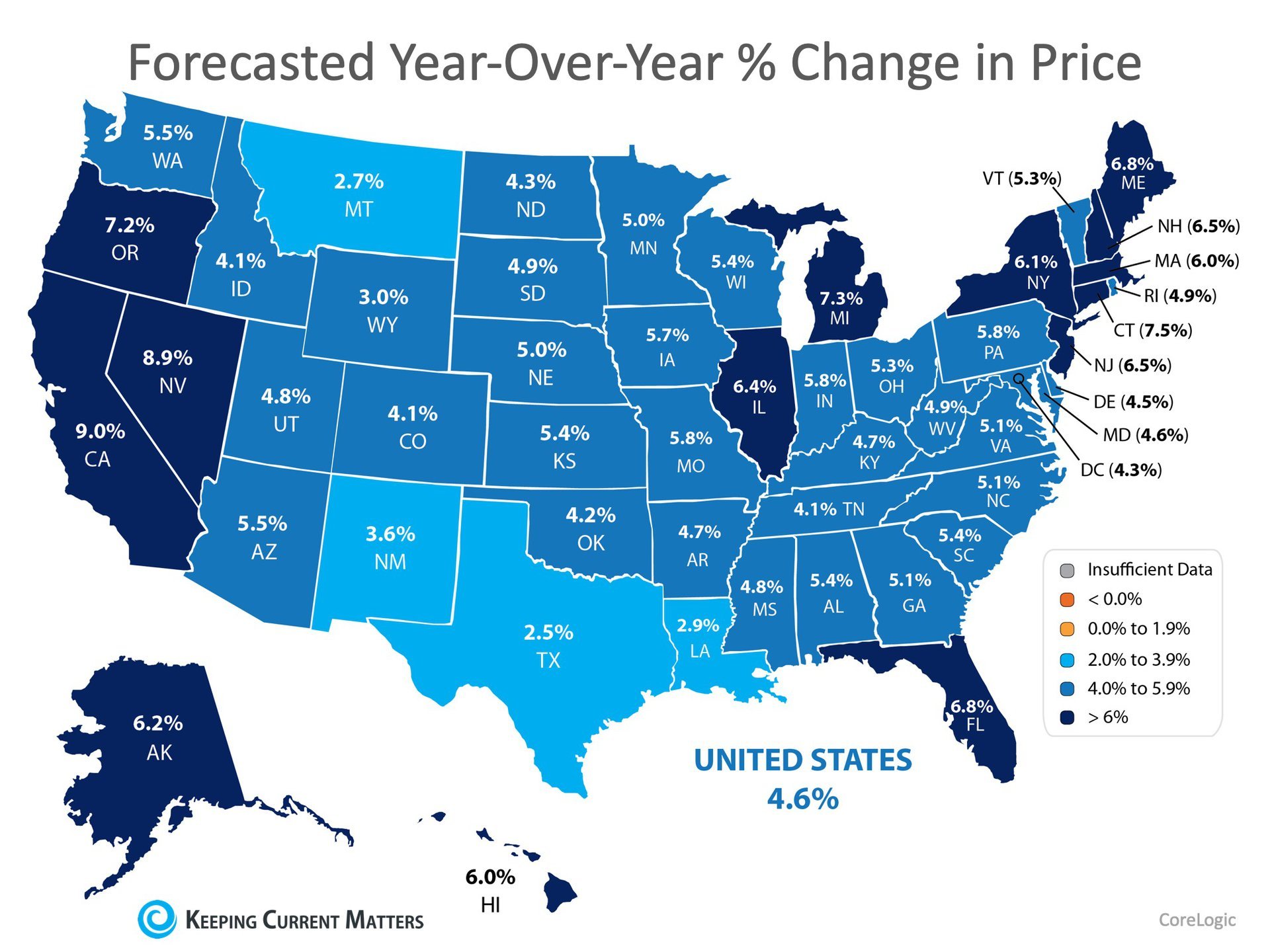
This effect will be short lived. In the same report, CoreLogic forecasts that every state in the Union will experience at least 2.0% appreciation, with the majority of the country gaining at least 4.0%! The prediction for the country comes in at 4.6%. For a median-priced home, that translates to over $14,000 in additional equity next year! (The map below shows the forecast by state.)
How To List Your Home for the Best Price | Keeping Current Matters

So, how does this help you list your home for the best price?

Armed with the knowledge of how much experts believe your house will appreciate this year, you will be able to set an appropriate price for your listing from the start. If homes like yours are appreciating at 4.0%, you won’t want to list your home for more than that amount!
One of the biggest mistakes homeowners make is pricing their homes too high and reducing the price later when they do not get any offers. This can lead buyers to believe that there may be something wrong with the home, when in fact the price was just too high for the market.

Bottom Line

Pricing your home right from the start is one of the most challenging parts of selling your home. Once you decide to list your house, contact us today.

Sunday, February 3, 2019

Do You Know How Much Your Home Has Increased In Value?

Last year we saw headlines about a possible housing market bubble, and many wondered if Americans still felt confident about the value of their homes. Recently, the 2018 Houzz & Home Study revealed:
Homeowners with mortgages have seen their home equity more than double since 2011, increasing to a record-setting $8.3 trillion in 2017.”
The average homeowner gained $16,200 in home equity between Q2 2017 and Q2 2018 according to the latest release of CoreLogic’s Home Equity Report.
Since 2011 home values have increased significantly throughout the country, with prices rising by 5.1% in 2018 alone. When surveyed, homeowners revealed the top four reasons why they felt their homes had increased in value.
  1. Desirable Location
  2. Improved National Economy
  3. Improved Local Economy
  4. Low Home Inventory in My Area
As we can see, not only does the data show that the homes have appreciated, but homeowners also believe they know why. Many have taken advantage of the opportunity to use their newly found equity to sell their current house and move up to their dream home!
2019 will be a good year for the homeowners that still want to take advantage of their home equity! CoreLogic forecasts that home prices will increase by 4.8% by the end of the year.

Bottom Line

If you are a homeowner who would like to find out your current home value, contact The Merg Team who can help you to discover the hidden opportunities in your home!

Friday, January 4, 2019

Upsizing Your Home


Unfortunately, our homes don’t always grow with us. What may have initially worked fine for a single person, a young couple’s starter home, or a family with a newborn can quickly become too small as families expand and multiple generations live under one roof.

Remodeling and adding to your home is one option for creating more space, but it can be costly, and the size of your property may be prohibitive. That’s when moving to a bigger home becomes the best solution.

WHERE DO YOU NEED MORE SPACE?

The first thought when upsizing your home is to simply consider square footage, bedrooms, and bathrooms. But it’s important to take a more critical approach to how your space will actually be used. If you have younger children (or possibly more on the way), then focusing on bedrooms and bathrooms makes sense. But if your children are closer to heading off to college or starting their own families, it may be better to prioritize group spaces like the kitchen, dining room, living room, and outdoor space—it’ll pay off during the holidays or summer vacations, when everyone is coming to visit for big gatherings.

MOVING OUTWARD

If you need more space, but don’t necessarily want a more expensive home, you can probably get a lot more house for your money if you move a little further from a city center. While the walkability and short commutes of a dense neighborhood or condo are hard to leave beyond, your lifestyle—and preferences for hosting Thanksgiving, barbecues, and birthdays—might mean that a spacious home in the suburbs makes the most sense. It’s your best option for upsizing while avoiding a heftier price tag.

Thursday, December 27, 2018

What Makes A House A Home?


We frequently talk about why it makes sense to buy a home financially, but more often than not the emotional reasons are the more powerful or compelling ones.
No matter what shape or size your living space is, the concept and feeling of a home can mean different things to different people. Whether it’s a certain scent or a favorite chair, the emotional reasons why we choose to buy our own homes are typically more important to us than the financial ones.

1. Owning your home offers stability to start and raise a family

From the best neighborhoods to the best school districts, even those without children at the time of purchase may have this in the back of their minds as a major reason for choosing the location of the home that they purchase.

2. There’s no place like home

Owning your own home offers you not only safety and security, but also a comfortable place that allows you to relax after a long day!

3. You have more space for you and your family

Whether your family is expanding, an older family member is moving in, or you need to have a large backyard for your pets, you can take all this into consideration when buying your dream home!

4. You have control over renovations, updates, and style

Looking to actually try one of those complicated wall treatments that you saw on Pinterest? Tired of paying an additional pet deposit for your apartment building? Or maybe you want to finally adopt that puppy or kitten you’ve seen online 100 times? Who’s to say that you can’t do all of these things in your own home?

Bottom Line

Whether you are a first-time homebuyer or a move-up buyer who wants to start a new chapter in your life, now is a great time to reflect on the intangible factors that make a house a home.

Thursday, December 20, 2018

5 Reasons To Sell This Winter!


Here are five reasons listing your home for sale this winter makes sense.

1. Demand Is Strong

The latest Buyer Traffic Report from the National Association of Realtors (NAR) shows that buyer demand remains strong throughout the vast majority of the country. These buyers are ready, willing and able to purchase… and are in the market right now! More often than not, multiple buyers are competing with each other to buy a home.
Take advantage of the buyer activity currently in the market.

2. There Is Less Competition Now

Housing inventory is still under the 6-month supply that is needed for a normal housing market. This means that, in the majority of the country, there are not enough homes for sale to satisfy the number of buyers in the market. This is good news for homeowners who have gained equity as their home values have increased. However, additional inventory could be coming to the market soon.
Historically, the average number of years a homeowner stayed in their home was six but has hovered between nine and ten years since 2011. There is a pent-up desire for many homeowners to move, as they were unable to sell over the last few years because of a negative equity situation. As home values continue to appreciate, more and more homeowners will be given the freedom to move.
The choices buyers have will continue to increase. Don’t wait until this other inventory comes to market before you decide to sell.

3. The Process Will Be Quicker

Today’s competitive environment has forced buyers to do all they can to stand out from the crowd, including getting pre-approved for their mortgage financing. This makes the entire selling process much faster and much simpler as buyers know exactly what they can afford before home shopping. According to Ellie Mae’s latest Origination Insights Report, the time to close a loan has dropped to 46 days.

4. There Will Never Be a Better Time to Move Up

If your next move will be into a premium or luxury home, now is the time to move up! The inventory of homes for sale at these higher price ranges has forced these markets into a buyer’s market. This means that if you are planning on selling a starter or trade-up home, your home will sell quickly, AND you’ll be able to find a premium home to call your own!
Prices are projected to appreciate by 4.8% over the next year according to CoreLogic. If you are moving to a higher-priced home, it will wind up costing you more in raw dollars (both in down payment and mortgage payment) if you wait.

5. It’s Time to Move on With Your Life

Look at the reason you decided to sell in the first place and determine whether it is worth waiting. Is money more important than being with family? Is money more important than your health? Is money more important than having the freedom to go on with your life the way you think you should?
Only you know the answers to the questions above. You have the power to take control of the situation by putting your home on the market. Perhaps the time has come for you and your family to move on and start living the life you desire.

That is what is truly important.

Tuesday, December 18, 2018

Don't get caught in the rental trap in 2019

Every year around this time, we take time to reflect and plan for next year. If you are renting your current home but have dreams of homeownership, your plan for the new year may include buying, and you wouldn’t be alone!
According to the 2018 Bank of America Homebuyer Insights Report, 74% of renters plan on buying in the next 5 years, with 38% planning to buy in the next 2 years!
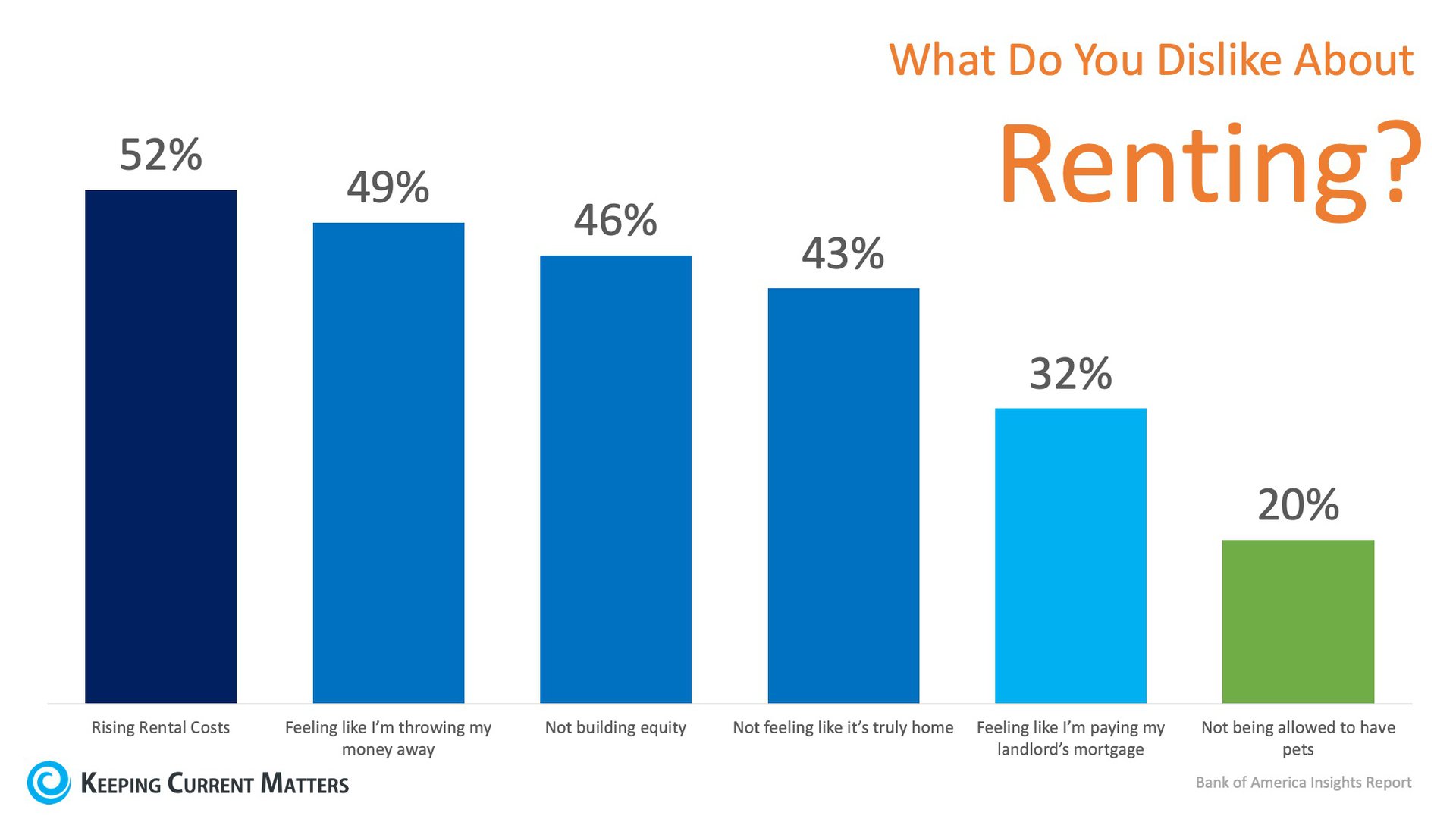
When those same renters were asked why they disliked renting, 52% said that rising rental costs were their top reason, and 42% of renters believe that their rent will rise every year. The full results of the survey can be seen below:
Don't Get Caught in the Rental Trap in 2019 | Keeping Current Matters
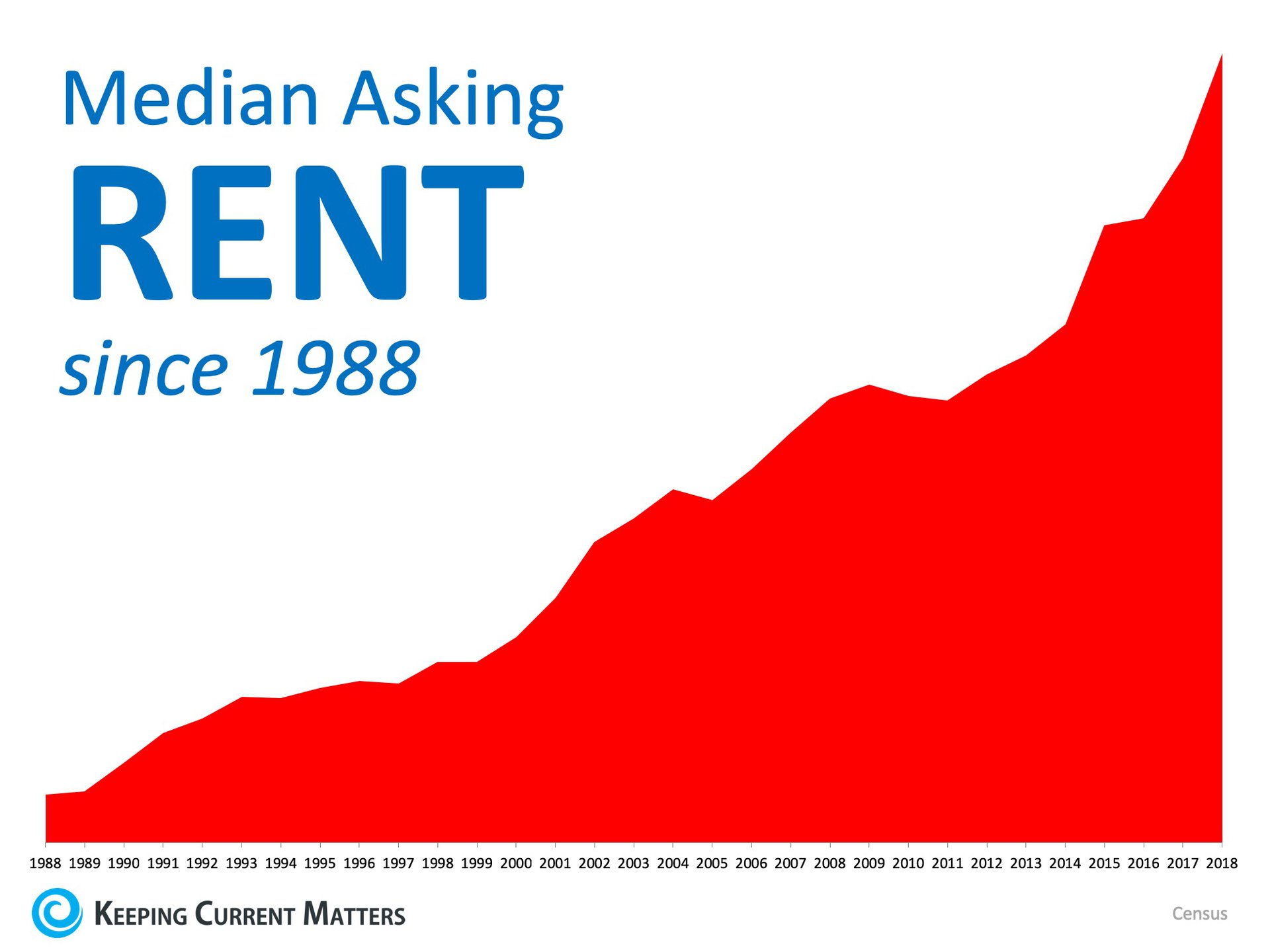
It’s no wonder that rising rental costs came in as the top answer! The median asking rent price has risen steadily over the last 30 years, as you can see below!
Don't Get Caught in the Rental Trap in 2019 | Keeping Current Matters
There is a long-standing rule that a household should not spend more than 28% of its income on housing expenses. With nearly half of renters (48%) surveyed already spending more than that, and with their rents likely to rise again… why are they renting?
When asked why they haven’t purchased a home yet, not having enough saved for a down payment (44%) came in as the top response. The report went on to reveal that nearly half of all respondents believe that “a 20% down payment is required to buy a home.”
If the majority of those who believe they haven’t saved a large enough down payment believe that they need 20% down to buy, that means a large number of renters may be able to buy now!

Bottom Line

If you are one of the many renters who is fed up with rising rents but may be confused about what is required to buy in today’s market, contact a local real estate professional who can help you on your path to homeownership.

Tuesday, December 11, 2018

California Passes Solar Panel Requirement on New Homes


Starting in 2020, all new homes constructed in California will be required to have between 2 kilowatts and 3 kilowatts of electricity sourced directly from solar panels. State legislators, whom have been considering such a measure for some time, officially voted recently to amend state building codes. Other states are watching how the change plays out and may want to follow suit, California officials have said. “These provisions really are historic and will be a beacon of light for the rest of the country,” says Kent Sasaki, chair of the California Building Standards Commission. “It’s the beginning of substantial improvement in how we produce energy and reduce consumption of fossil fuels.”
The new mandate, however, won’t be cheap to homeowners. The upfront costs of installing typical solar panels ranges from $8,000 to $12,000. The timing of the move also worries residents who lost their homes in recent wildfires in California because the mandate will add to their rebuilding costs. “With median home prices in California already more than double the national average, this decision will make it even more difficult for the average Californian to afford a home,” California Assemblyman James Gallagher wrote in a recent letter to the Building Standards Commission.
But the commission says the extra costs, which will be applied to a homeowner’s mortgage, should be minimal over the life of the loan. In the case of a 30-year fixed rate mortgage, the additional cost amounts to an extra $40 per month—but the savings in monthly utility charges could be around $80 per month. The commission also says homeowners can lease solar panels instead of buying them up front.